


The cost to redo a small bathroom can jump fast when a “simple” tile swap exposes wet drywall, old plumbing, or a weak subfloor. In Queens, the room may be small, but the work behind the walls isn’t.
What matters is scope: keep the layout, protect the wet areas, and know what your estimate actually includes. Don’t let a low number hide the expensive parts.
Here’s where budgets usually get tested:
- Moving a toilet or shower drain
- Waterproofing behind tile, not just grout
- Building access, permits, and debris removal
Price it right before the room comes apart.
What It Usually Costs to Redo a Small Bathroom in Queens
Let’s get to the number first. When Queens homeowners ask about the cost to redo small bathroom spaces, they’re usually talking about a room under 40 square feet, often a tight 5 by 7 setup with a toilet, vanity, and tub or shower.
Here are the price bands that tend to be the most useful:
- Cosmetic refresh, same layout: about $8,000 to $14,000
- Full gut remodel, same layout: about $14,000 to $22,000
- Full gut remodel with layout changes: about $20,000 to $28,000
Those ranges make more sense than the broad citywide numbers people see online. If you’ve searched the average bathroom remodel NYC cost, you’ve probably seen totals anywhere from $8,000 to $35,000 for a small bath. That’s not wrong, but it’s not very helpful either. A simple refresh, a real renovation, and a high-end custom job often get lumped into one headline.
That is how homeowners get thrown off.
A small bathroom does not automatically mean a small bill. The useful number is the one that matches your actual scope, your building, and the condition behind the walls. If you’re comparing a paint-and-vanity update to a full tear-out with waterproofing and new tile, you’re not comparing the same job.
The right price range starts with scope, not square footage alone.
Why Bathroom Remodel Cost Numbers Seem to Contradict Each Other
This is where most of the confusion starts. One article says a small bath can be redone for the low five figures. Another says the number is much higher. Both can be true.
The gap usually comes down to what kind of work is actually included.
A cosmetic update is mostly surface work:
- paint
- a new mirror or light
- faucet and trim swaps
- a vanity replacement
- a toilet replacement
- minor finish cleanup
A real renovation is a different animal. That usually includes demolition, substrate repair, waterproofing, tile installation, plumbing work, electrical work, ventilation, and sometimes permits and inspections.
Those are not interchangeable scopes. They just happen in the same room.
Another thing people miss is that small bathrooms are often expensive per square foot. Published NYC numbers for compact baths often land around $115 to $370 per square foot. That sounds high until you think about what the room demands. Even in a 35 square foot bathroom, you still need careful demo, prep, waterproofing, plumbing connections, finish work, and code-safe installation. Tight space doesn’t remove the skilled labor. Sometimes it makes the work slower.
Then you add borough differences, walk-up access, co-op rules, disposal conditions, and finish level. Suddenly the online range looks less like a contradiction and more like a pile of different jobs wearing the same label.
The clean way through it is simple: match the estimate to the scope, not to the article headline.
Three Budget Tiers That Help Queens Homeowners Plan Better
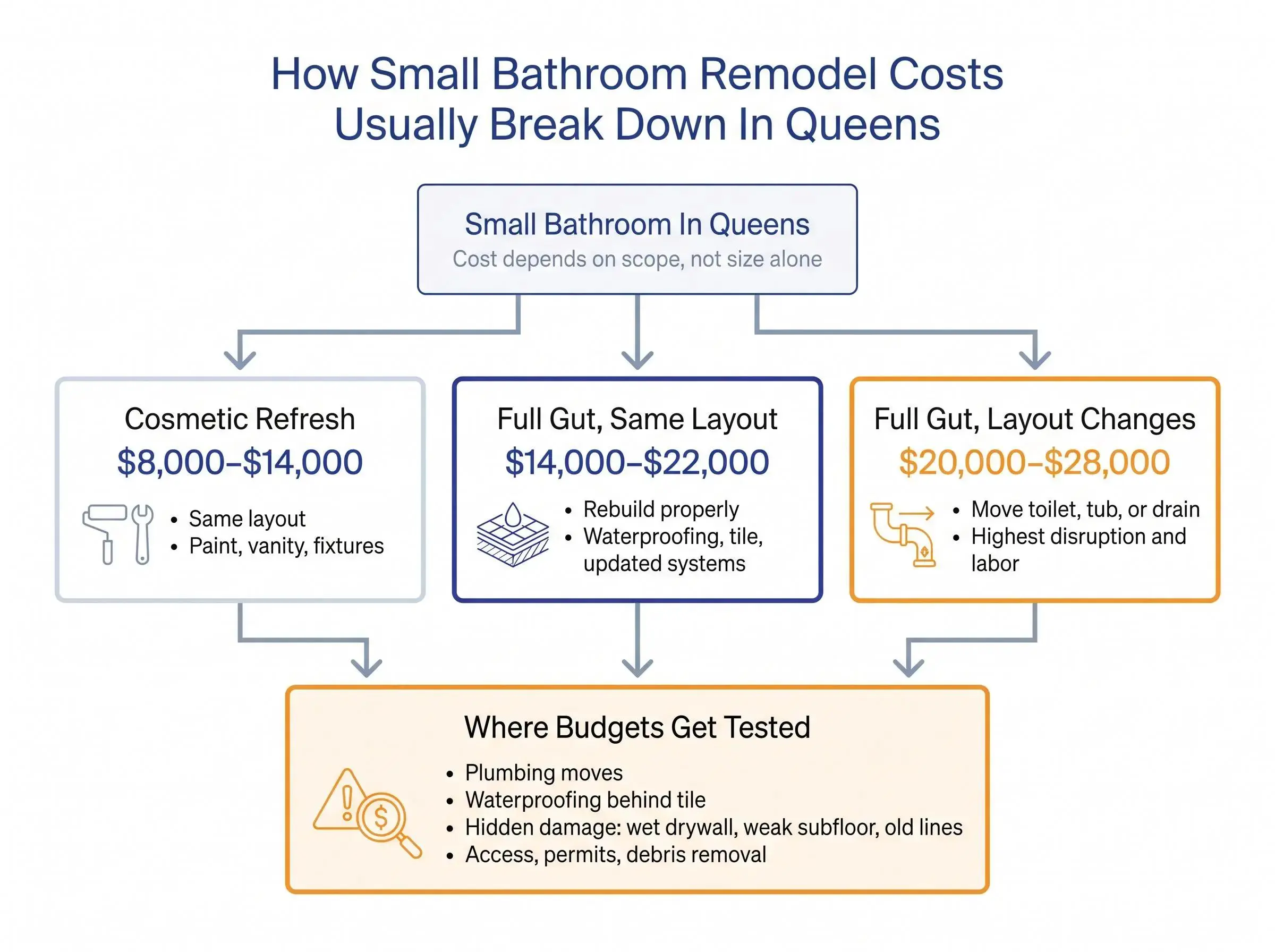
If you’re trying to place your project quickly, this framework helps. Most small bathroom jobs fall into one of these three buckets.
Tier 1: Cosmetic refresh
This is for bathrooms that still work fine but feel tired. The layout stays put. The room doesn’t have active leak issues, failing tile, or bad ventilation.
Typical scope might include:
- painting
- a new vanity
- new faucet and trim
- mirror and light replacement
- toilet replacement
- minor surface touch-ups
This tier works best when the plumbing, tile base, and exhaust setup are still in decent shape. If those things are suspect, a refresh can turn into a cover-up. That’s money spent twice.
Tier 2: Full gut with the same layout
This is the middle lane, and for a lot of Queens homes it’s the smart one. The bathroom gets stripped down, rebuilt properly, and brought back with new finishes, but the plumbing locations stay where they are.
Typical scope often includes demolition, new backer board, waterproofing, tile, vanity, fixtures, lighting, and a ventilation upgrade. Keeping the toilet, tub, and drain locations in place is usually the biggest cost control move in the whole job.
We say this a lot because it’s true: if the layout works, don’t pay to prove otherwise.
Tier 3: Full gut with layout changes
This is for bathrooms that are awkward to use, too cramped, or just badly set up. You may want to move the vanity, swap a tub for a shower, shift the toilet, or rebuild parts of the room from studs.
That kind of work can be worth it. It also raises cost fast because you’re adding plumbing changes, more labor, more coordination, and sometimes permit-related steps.
Here’s the quick comparison:
| Tier | Likely Cost Range | Disruption Level | Best Fit |
|---|---|---|---|
| Cosmetic refresh | $8,000 to $14,000 | Lower | Functional bathroom that looks dated |
| Full gut, same layout | $14,000 to $22,000 | Moderate to high | Older bath with worn finishes or failing systems |
| Full gut, layout changes | $20,000 to $28,000 | High | Cramped or poorly functioning bathroom |
Where the Money Actually Goes in a Small Bathroom Redo
A bathroom estimate feels less mysterious once you break it into real buckets. You’re not paying for “a bathroom.” You’re paying for several different phases, and some of them happen before the nice-looking parts even show up.
Demolition and removal
This covers tearing out fixtures, tile, flooring, wall finishes, and hauling debris away. On paper it looks straightforward. In practice, demo affects dust control, cleanup, protection of adjacent areas, and what gets exposed once the room is open.
Old bathrooms rarely come apart politely.
If walls open up or the layout changes, demolition and installation framing stops being a side item and becomes a real budget line.
Build-back and prep
This is the part homeowners don’t see when the room is done, and it’s often the part that decides whether the job lasts.
It can include:
- subfloor correction
- wall repair
- cement board or other tile backing
- waterproof membranes
- shower base prep
- framing changes where needed
A bathroom can look finished and still be built wrong underneath. That’s the expensive mistake.
Plumbing and electrical
New supply lines, drain work, fixture hookups, lights, outlets, and fan installation sit here. If the layout changes, these costs jump. Moving a toilet is not a small tweak. It can mean drain changes, vent work, and more opening of floors or walls than people expect.
Tile and finish labor
Tile labor often outruns tile material cost, especially in small baths. The work is detailed. Corners, cuts, niches, trims, slopes, and grout joints all take time.
A simple field tile pattern is one thing. A room with a niche, accent band, bench, and tricky cuts around valves is another.
Fixtures, permits, and coordination
Fixtures include the vanity, sink, toilet, shower trim, lighting, hardware, and sometimes glass. Some local numbers frame a small bathroom around roughly $3,000 in fixtures, plus labor near $100 per square foot. That helps explain why even a tiny room adds up fast.
Then there are permits, inspections, scheduling, and day-to-day coordination. In New York work, those aren’t side issues. They’re part of the job.
What Affects Bathroom Remodel Cost Most
If you’re asking what affects bathroom remodel cost, these are the variables that move it the most. Not all upgrades hit the budget equally.
- Layout changes: Moving a toilet or shower is one of the fastest ways to raise price. You’re not just moving a fixture. You’re moving plumbing, drains, venting, and often paperwork.
- Existing condition: Old plumbing, soft subfloor, hidden moisture, mold, or broken tile beds can turn a straightforward plan into a deeper repair job.
- Waterproofing and moisture control: Cement board, membranes, proper slope, and solid grout work are not optional if you want the room to last.
- Tile complexity: Large-format tile, stone, handmade tile, tight patterns, and heavy cutting all take more labor.
- Fixture quality: Frameless glass, wall-hung vanities, heated floors, premium trim, custom niches, and benches all raise the spend.
- Accessibility features: Zero-entry showers, grab bars, seats, and low-threshold entries can be worth every dollar, but they do add labor and planning.
- Ventilation and code compliance: A stronger fan, proper outlet protection, and safe installation standards may not be flashy, but bad moisture control will make itself known.
- Access and logistics: Walk-ups, limited staging, restricted disposal, and building rules affect labor efficiency more than people think.
One operator’s rule here: features are cheaper than repairs only when the basics are already right.
Queens-Specific Cost Drivers, Including Flushing and Other Dense Building Environments
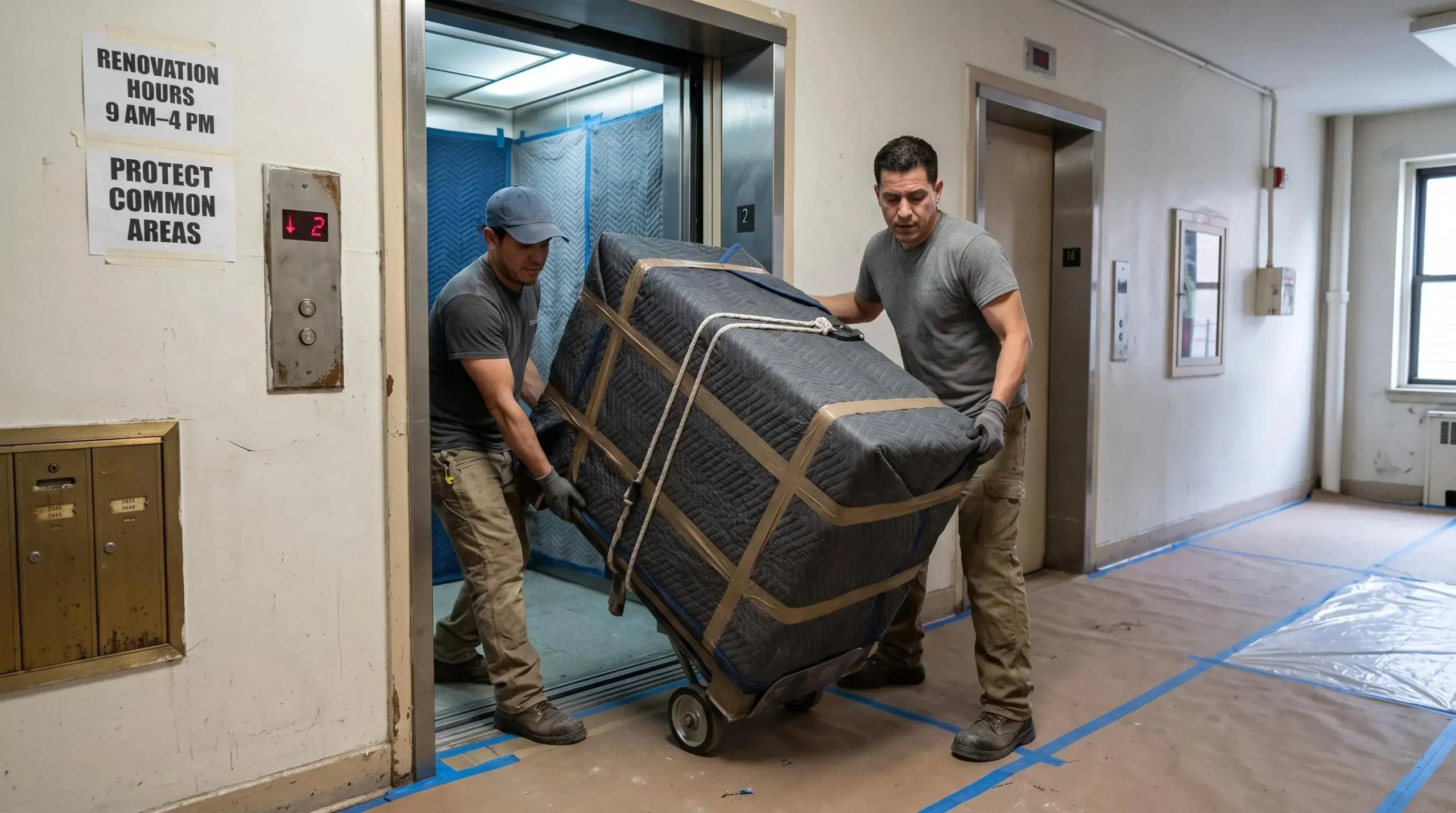
Bathroom remodel cost in Queens is shaped by more than room size. Building age, access, and rules often carry as much weight as the finish list.
Older homes and apartments often hide dated plumbing, compact framing, and weak ventilation. A room that looks like a simple surface update can turn into a deeper correction once demo starts. That’s common enough that we tell people to budget for it, not act surprised by it.
In co-ops and condos, board approvals and work-hour restrictions can slow the start and compress the workday. Protection requirements matter too. Hallways, elevators, stairwells, and common areas don’t protect themselves.
A few local realities that affect pricing:
- tight stair access or elevator rules
- delivery windows
- debris removal logistics
- older plumbing lines
- restricted work schedules
- permit-aware coordination for moved systems
For permit-related work, published budgeting often lands around $500 to $1,500, depending on the job. If you’re moving plumbing or doing major electrical work, that line should not be treated like an afterthought.
A few code-related basics also show up often in bathroom work:
- GFCI-protected outlets
- exhaust ventilation around 50 CFM
- safe backing and installation where grab bars may be needed
As for bathroom renovation prices Flushing homeowners ask about, the ZIP code itself usually isn’t the main driver. Scope, access, building type, and existing conditions are. Ardson Construction is based in Flushing, so we know the local mix of apartments, attached homes, and older interiors is not one-size-fits-all.
Smart Ways to Control Cost Without Cutting the Wrong Corners
There are good ways to control a bathroom budget, and then there are cheap decisions that come back to bite you. Those are not the same thing.
The strongest money-saving move is usually keeping the layout if it already works. Leaving the toilet, tub, and drain where they are protects both labor and schedule. Every moved line creates more chances for added cost.
Spend where failure starts:
- waterproofing
- substrate prep
- plumbing connections
- electrical safety
- ventilation
Those are not the places to shop for the lowest number.
If you need savings, look harder at finishes. A stock vanity can work very well. A clean tile layout is often smarter than an intricate one. Porcelain or ceramic usually gives a better budget-to-performance balance than natural stone in a small daily-use room.
There are also space-improving moves that don’t always require structural changes:
- wall-mounted vanity
- recessed shower niche
- better layered lighting
- larger mirror
- larger-format tile to reduce visual clutter
Phased upgrades can make sense, but only when the room is fundamentally sound. If the substrate is failing or moisture control is weak, partial work becomes false economy. A bathroom is not a place where hiding problems buys much time.
Cheap bathroom work is often just delayed expensive bathroom work.
Red Flags That Usually Lead to Budget Surprises
Most budget blowups leave clues early. Homeowners feel the risk, but they don’t always know what they’re looking at yet.
Watch for these:
- a one-line lump sum with no scope detail
- very low bids that barely mention prep, waterproofing, or debris removal
- no clarity on permits, cleanup, or protection of nearby areas
- assumptions that walls, plumbing, or subfloor are “fine” before demo confirms it
- lots of tile talk, very little behind-the-wall talk
- vague timing promises in occupied apartments or board-regulated buildings
- product selections left open in a way that invites change orders later
Low numbers can be honest. They can also be incomplete.
Licensed and insured matters here, not because it sounds nice, but because bathroom work has real risk attached to water, electricity, dust, access, and neighboring spaces. Hands-on execution matters too. The person pricing the work should understand what the room will actually ask for.
How to Read a Bathroom Contractor Estimate in Queens
A solid bathroom contractor estimate Queens homeowners can trust should be specific enough to compare line by line. If it’s vague, it isn’t helping you make a decision.
At minimum, look for clear scope around:
- demolition and disposal
- plumbing work
- electrical work
- waterproofing method
- tile areas and tile type assumptions
- fixtures included and excluded
- ventilation work
- permit responsibility
- cleanup and protection
Then look at the allowances. This is where a cheap-looking proposal can quietly get expensive. If the estimate includes low product allowances for the vanity, fixtures, tile, or glass, the total may rise the minute you choose real products.
Ask these questions before comparing totals:
- Is this based on keeping the same layout?
- What happens if hidden conditions show up after demolition?
- Who handles permits and inspections if needed?
- Who manages scheduling and communication?
- Are adjacent areas protected and cleaned daily?
You want apples-to-apples comparison. Two estimates with different scope are not really two prices for the same job.
Clear pricing and plain language usually signal respect for the client’s decision-making process. That matters more than fancy presentation.
| Item | What to Verify | Why It Matters |
|---|---|---|
| Demolition and disposal | Whether removal, hauling, and disposal are clearly included in scope | Low bids may omit prep or debris removal, making totals hard to compare |
| Plumbing work | What plumbing is included and whether pricing assumes the same layout | Changing layout can raise cost fast, especially when lines or drains move |
| Electrical work | Which electrical items are covered in the proposal | Electrical safety and code-safe installation are part of a real renovation scope |
| Waterproofing method | The specific waterproofing method, not just a vague mention of tile work | A proposal that talks about tile but not behind-the-wall protection can hide risk |
| Tile areas and tile type assumptions | What surfaces are tiled and what tile type the price assumes | Different tile scope or complexity means you are not comparing the same job |
| Fixtures and allowances | Which fixtures are included or excluded and whether allowances are realistic for vanity, fixtures, tile, or glass | Cheap-looking proposals can get expensive when low allowances are replaced with real product selections |
| Ventilation work | Whether fan or ventilation work is specifically included | Ventilation and moisture control are part of lasting bathroom performance |
| Permits and inspections | Who handles permits and inspections if needed | Permit responsibility should not be an afterthought when scope may require it |
| Cleanup and protection | How adjacent areas are protected and whether cleanup is done daily | No clarity on cleanup or protection is a common early warning sign |
| Hidden conditions and coordination | What happens if hidden conditions appear after demolition and who manages scheduling and communication | Older Queens bathrooms can reveal moisture, subfloor, plumbing, or vent issues once opened up |
Planning for Timeline, Disruption, and Contingency
The budget is one thing. Living through the job is another.
Even a small bathroom redo can take several weeks, especially if it’s a full gut, if permits are involved, or if building approvals slow the start. A six-week timeline for one bathroom is not unusual once you count planning, demolition, rough work, prep, tile, fixtures, punch list, and inspections.
A typical sequence looks like this:
Typical project sequence
- Planning
planning and selections
- Demolition
demolition
- Rough-ins
rough plumbing and electrical
- Prep
prep and waterproofing
- Installation
tile and finish installation
- Closeout
fixtures, punch list, and inspections
If it’s your only bathroom, that timing matters a lot more than it sounds on paper.
For older Queens homes and apartments, we usually tell people to carry a contingency reserve of about 15 to 20 percent. Hidden moisture, bad subfloor, outdated lines, or vent issues don’t care what your original spreadsheet said.
Schedule pressure is where quality starts getting traded away. Rush the job, and you often pay through change orders, shortcuts, or both.
What a Bathroom Remodel May Return at Resale
A bathroom redo is primarily a use-and-reliability decision, but resale value can help put a higher budget in perspective. In the 2025 Cost vs. Value Report, the national midrange bathroom-remodel benchmark retained 80% of its project cost at resale. The more elaborate universal-design and upscale benchmarks retained smaller shares.
These are national averages across 119 U.S. markets, not Queens appraisals or a prediction of what any individual co-op, condo, or house will sell for. They are most useful for comparing how finish level can change the resale trade-off—not for setting a renovation budget.
| Remodel type | Job cost | Resale value | Cost recouped |
|---|---|---|---|
| Midrange bathroom remodel | $26,138 | $20,915 | 80% |
| Universal-design bathroom remodel | $42,183 | $25,812 | 61% |
| Upscale bathroom remodel | $81,612 | $34,000 | 42% |
The pattern is worth keeping in mind when selecting upgrades. A bigger spend does not automatically translate into a proportionally bigger resale value, especially when the work moves from a practical midrange remodel toward a highly customized upscale project.
When a Refresh Is Enough and When a Full Redo Is the Smarter Investment
Not every bathroom needs a gut renovation. Not every bathroom should avoid one either.
A refresh may be enough if:
- the layout works
- there are no leak signs
- tile and substrate are stable
- ventilation is adequate
- you’re mainly after a visual update
In that case, putting money into paint, lighting, vanity, and fixtures can give the room a real lift without opening everything up.
A full redo is usually the better move when:
- water damage keeps showing up
- plumbing is old or unreliable
- ventilation is poor
- tile is loose, cracked, or failing
- the room feels cramped or unsafe to use well
Patchwork has a way of pretending to save money. Then it keeps calling you back.
The real goal is not spending the least today. It’s reducing the chance of repeat disruption, callbacks, and paying twice for the same wall.
Conclusion
The cost to redo small bathroom spaces in Queens depends most on scope, layout changes, hidden conditions, building logistics, and finish choices. That’s where the real movement is. Not the headline number.
If you want the process to feel more controlled, define the scope clearly, keep the layout when it makes sense, carry a contingency, and compare itemized estimates instead of chasing the lowest total. That’s how you cut through the noise around bathroom remodel cost Queens pricing and make sense of the wide average bathroom remodel NYC ranges you see online.
A practical next step is simple: measure the room, write down what must change and what is optional, then get a detailed estimate from a licensed and insured local contractor before you make design or budget assumptions. That one move will save you more confusion than hours of searching ever will.